Google Review Management for Restaurants: The Complete Guide
For most people, choosing where to eat starts with a quick search. They look at star ratings, scan a few reviews, and make a decision in under a minute. If your restaurant does not have a strong review presence on Google, you are invisible to a huge portion of your potential customers, no matter how good the food is. In a TripAdvisor survey of more than 9,500 diners, 94% of U.S. respondents said they had based a dining decision on online reviews.
But restaurant review management is not just about collecting stars. It is about responding to complaints before they go viral, turning first-time visitors into repeat guests, and using feedback as a real operational tool to improve your kitchen, your service, and your bottom line. This guide covers everything you need to know, from getting more reviews to handling the toughest complaints to building a simple system your team can follow every day.
Why Google Reviews Matter Even More for Restaurants
Every business benefits from positive reviews, but restaurants operate in a uniquely review-driven environment. Here is why:
- Diners research before they dine. Unlike many purchases, choosing a restaurant is an emotional and social decision. People are spending money on an experience, not just a product. A 4.2-star restaurant with 200 reviews will almost always beat a 4.8-star restaurant with 6 reviews because volume signals trustworthiness.
- Google's local pack dominates restaurant searches. When someone searches "best Italian restaurant near me," the top three results in the local pack are determined heavily by review count, average rating, and recency. Without a strong review profile, you simply will not appear.
- One bad review carries disproportionate weight. A single detailed negative review about food quality or hygiene can deter dozens of potential customers. In restaurants, the stakes of each review are higher because food and health are deeply personal.
- Reviews drive repeat visits. When you respond thoughtfully to a positive review, you reinforce the guest's decision to eat at your restaurant. They feel seen. That emotional connection turns a one-time diner into a regular.
Restaurant-Specific Review Challenges
Managing reviews for a restaurant is fundamentally different from managing them for, say, a law firm or a plumbing company. Restaurants face a unique set of challenges:
- High volume of reviews. A busy restaurant might serve hundreds of guests per week. Even if only a small percentage leave reviews, that adds up fast. Keeping up with responses requires a system, not just good intentions.
- Emotional complaints about food and service. Food is personal. When someone has a bad meal, they feel it more intensely than a bad experience with most other services. Reviews about cold food, rude servers, or long wait times tend to be more detailed and more emotional than reviews in other industries.
- Seasonal fluctuations. Many restaurants experience dramatic shifts in volume between busy and slow seasons. A rush of negative reviews during an understaffed summer patio season can drag down an entire year of good ratings.
- Competitor density. In most markets, diners have dozens of options within a short drive. Your reviews are not just being judged on their own. They are being compared side by side against competitors in the same Google search results.
- Staff turnover. High turnover means the server who earned glowing reviews last month might be gone next month, and the new hire might generate complaints. Consistency is hard to maintain, and reviews reflect that.
How to Get More Google Reviews for Your Restaurant
The most effective restaurant review management strategy starts with volume. The more reviews you have, the more resilient your rating becomes to the occasional negative experience. Here are proven tactics that work specifically for restaurants:
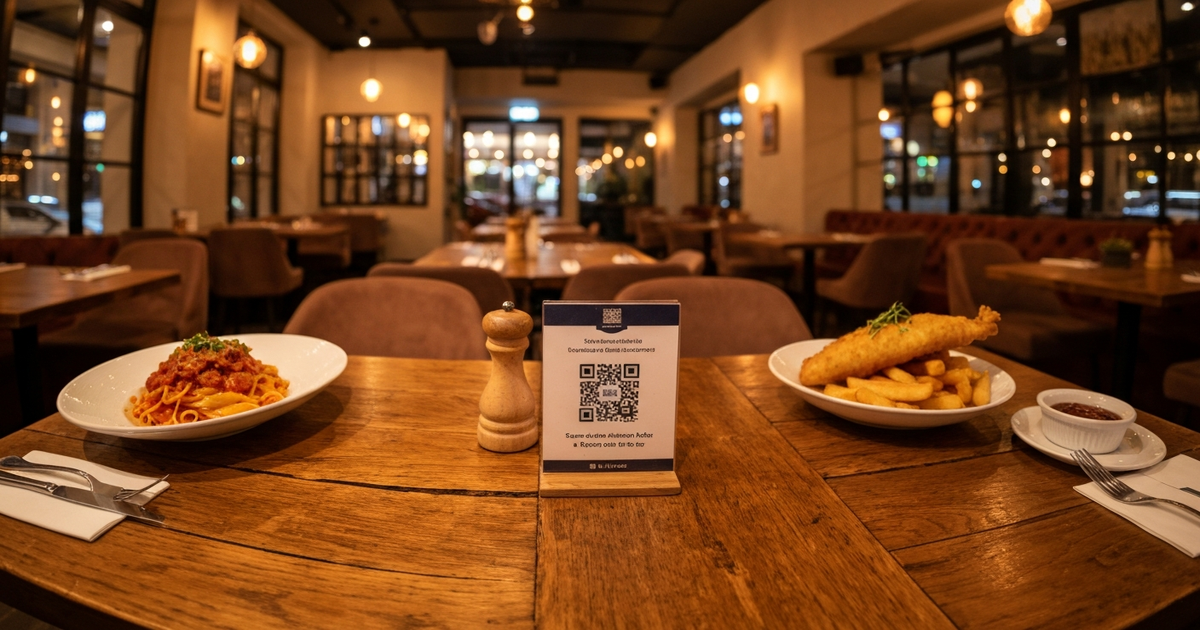
- Table cards with QR codes. Place a small card on every table with a QR code that links directly to your Google review page. Diners can scan it while waiting for the check. This is one of the highest-converting tactics for restaurants because it catches guests while the meal is still fresh.
- Receipt prompts. Add a short message at the bottom of every receipt: "How was your meal? We would love your feedback on Google." Include a short URL or QR code. This works especially well for takeout and delivery orders.
- Staff training. Train your servers and hosts to ask every table for a review. The script does not need to be complex. Something like "Thanks so much for joining us tonight. If you have a moment, a Google review would really help us out" is genuine and effective. The key is to ask every table the same way, not just the ones that seem happiest. Google's policies prohibit selectively soliciting positive reviews.
- Follow-up SMS and email. If you collect guest contact information through reservations or loyalty programs, send a brief follow-up message within 24 hours. Keep it personal. "Hi Sarah, thank you for dining with us last night. We hope you loved the salmon. If you have a moment, we would be grateful for a quick review." Include a direct link.
- Social media prompts. When guests tag your restaurant on Instagram or share a photo of their meal, respond with a thank-you and a gentle nudge: "So glad you loved it! If you have a second, we would really appreciate a Google review too." Guests who are already promoting you on social media are the most likely to leave a review.
The common thread in all of these tactics is timing and ease. You are asking every guest at the right moment, while the visit is still fresh, and you are making it as effortless as possible.
Responding to Restaurant Reviews: A Playbook for Every Situation
How you respond to reviews defines your restaurant's public personality. Every response is being read not just by the reviewer, but by hundreds of potential diners deciding whether to give you a try. Here is how to handle the most common restaurant review scenarios:
Food Quality Complaints
These are the most sensitive reviews for any restaurant. A guest saying the food was cold, undercooked, or tasted bad feels like a personal attack on your kitchen. But defensive responses always backfire. Instead, acknowledge the problem, apologize sincerely, and invite them back.
Example: "[Name], we are genuinely sorry to hear that your dish did not meet our standards. We take food quality seriously and this is not the experience we want any guest to have. We would love the chance to make it right. Please reach out to us at [email/phone] so we can discuss this personally."
Service Complaints
Reviews about rude or inattentive servers require a response that holds your team accountable without throwing any individual under the bus. Show that you have standards and that you are acting on the feedback.
Example: "[Name], thank you for letting us know about your experience. The level of service you described is not what we train our team to deliver, and we are addressing this directly. We hope you will give us another opportunity to show you the hospitality we are known for."
Wait Time Issues
Long waits are one of the most common restaurant complaints, especially during peak hours. Acknowledge the frustration without making excuses about how busy you were.
Example: "[Name], we apologize for the wait you experienced. We know your time is valuable and we fell short. We are working on improving our seating flow and kitchen timing to prevent this in the future. We hope to see you again soon."
Allergic Reactions and Dietary Concerns
These reviews require the most careful handling. A guest reporting an allergic reaction is a serious matter that involves both their health and your legal exposure. Respond with urgency and empathy, and take the conversation offline immediately.
Example: "[Name], we take allergen safety extremely seriously and we are deeply concerned to read about your experience. Please contact us immediately at [phone] so we can discuss what happened and review our kitchen protocols. Your health and safety are our top priority."
Wrong Orders
Wrong orders are frustrating but fixable. Acknowledge the mistake, avoid blaming anyone, and show that you are working to prevent repeats.
Example: "[Name], we sincerely apologize for the mix-up with your order. That is not the experience we want for our guests, and we are reviewing our order process to make sure it does not happen again. We would love to make it up to you. Please reach out to [email/phone]."
5 Positive Response Templates for Restaurants
Positive reviews deserve more than a generic "thank you." Here are five templates tailored for restaurant scenarios:
- Template 1 (Specific Dish Mention): "[Name], thank you so much for the wonderful review! We are thrilled you loved the [dish name]. Our chef puts a lot of heart into that one, and it is always great to hear when it hits the mark. We can not wait to welcome you back."
- Template 2 (Atmosphere and Experience): "What a fantastic review, [Name]! We work hard to create a warm and welcoming atmosphere, and hearing that you felt it means the world to our team. Thank you for dining with us, and we look forward to your next visit."
- Template 3 (Service Praise): "[Name], your kind words about our staff truly made our day. We will be sure to pass your compliments along to [server name/the team]. Thank you for choosing us, and we hope to see you again soon!"
- Template 4 (Special Occasion): "Thank you for celebrating [occasion] with us, [Name]! It was our pleasure to be part of such a special moment. We are so glad everything was perfect for you. Here is to many more celebrations together."
- Template 5 (Repeat Guest): "[Name], welcome back! We love that you keep coming back, and it means so much to know that we continue to deliver. Your loyalty is the best compliment we could receive. See you next time!"
5 Negative Response Templates for Restaurants
Handling negative reviews well can actually strengthen your reputation. These templates help you respond with empathy and professionalism:
- Template 1 (Food Complaint): "[Name], we are sorry to hear that your meal did not live up to expectations. We hold ourselves to high standards in the kitchen, and it sounds like we missed the mark. We would love the opportunity to make it right. Please contact us at [email/phone] and we will take care of you."
- Template 2 (Service Complaint): "[Name], thank you for your honest feedback. The service you described is not reflective of our values, and we are taking steps to address it. We hope you will give us another chance to show you the experience we are proud of. Please reach out to [email/phone]."
- Template 3 (Wait Time): "[Name], we sincerely apologize for the long wait. We understand how frustrating that is, especially when you are hungry and looking forward to a great meal. We are actively improving our processes to ensure this does not happen again. We hope to see you back soon."
- Template 4 (Wrong Order): "[Name], we are very sorry about the order mix-up. That is completely unacceptable and we are reinforcing our order accuracy procedures with the team. We would like to invite you back for a better experience. Please contact us at [email/phone] so we can arrange that."
- Template 5 (General Disappointment): "[Name], we are truly sorry that your visit did not meet your expectations. Every guest deserves an excellent experience, and we clearly fell short. We have shared your feedback with our management team and are working to improve. We would welcome the chance to earn back your trust."
Managing Reviews Across Google, Yelp, and TripAdvisor
Most restaurants receive reviews across multiple platforms, and each one has its own audience and norms. Here is how to think about each:
- Google should be your top priority. It drives the most visibility in local search and has the largest user base. Focus the majority of your review generation efforts here.
- Yelp has a loyal and vocal user base, particularly in urban markets. Yelp reviewers tend to write longer, more detailed reviews and are often experienced diners. Respond with the same level of detail and thoughtfulness.
- TripAdvisor is critical if you are in a tourist-heavy area. Travelers rely heavily on TripAdvisor for dining decisions, so maintaining an active presence here can drive significant foot traffic from visitors.
The challenge is that managing three separate platforms is time-consuming. This is where a centralized review management tool becomes essential. Rather than logging into each platform separately, you can monitor, respond to, and analyze all of your reviews from a single dashboard.
Using Review Feedback to Improve Restaurant Operations
Reviews are not just a marketing tool. They are a free, continuous stream of operational intelligence. Here is how to turn review data into actionable improvements:
- Track recurring themes. If three different reviewers mention slow service on Friday nights, that is not a coincidence. It is a staffing problem. If multiple guests mention that a specific dish was disappointing, it is time to revisit the recipe or preparation.
- Use reviews in staff meetings. Read positive reviews aloud to reinforce what is working. Share constructive feedback without blame to identify areas for improvement. This makes reviews part of your operational culture, not just a marketing metric.
- Monitor sentiment over time. A gradual decline in average rating might indicate a systemic issue like a new cook who is not performing well or a supplier change that affected food quality. Catching these trends early lets you fix problems before they become crises.
- Benchmark against competitors. Read your competitors' reviews to understand what guests value in your market. If a rival is getting praised for something you do not offer, consider whether it is worth adding. If they are getting criticized for something you do well, emphasize that strength in your marketing.
- Close the feedback loop. When you make a change based on review feedback, mention it in your responses. "Thanks to feedback like yours, we have extended our weekend hours" shows prospective diners that you listen and act.
How Feedback Guru Helps Restaurants Manage Reviews
Feedback Guru is purpose-built to make collecting Google reviews simple, and restaurants are one of our most successful use cases. The free plan collects up to 2 reviews per week, and the Pro plan removes the cap for $9.90 per month. Here is how it works:
- QR codes on every table. Each location gets a unique feedback link and a printable QR code (downloadable as a PDF). Print it on table cards, menu inserts, or check presenters so guests can scan without your staff needing to ask.
- One link for your own follow-ups. Paste the same link into the reservation follow-up texts and emails you already send, and on receipts for takeout and delivery orders.
- The same simple flow for every guest. Every guest rates their visit. Guests who rate 4 or 5 stars are taken straight to your Google review page. Guests who rate lower can send private feedback to you and are then also invited to leave a Google review. You hear about a cold dish or a slow night directly, so you can fix it and follow up with the guest.
- Email alerts. Get an email for each rating and piece of private feedback submitted through Feedback Guru.
- Review analytics. See how many guests visit your feedback link (including QR code scans), along with ratings and feedback over time for each location. Use it to spot trends and measure the impact of operational changes.
Our illustrative bistro case study shows how this can play out: a family-owned restaurant shares its Feedback Guru link with every diner, follows up personally on private feedback, and climbs from 3.5 to 4.8 stars.
Frequently Asked Questions
How many Google reviews does a restaurant need to be competitive?
There is no magic number. BrightLocal's 2024 Local Consumer Review Survey found that most consumers (59%) expect a business to have between 20 and 99 reviews, but restaurants are one of the most review-heavy categories: in our study of 57,589 US businesses, the median restaurant had 848 Google reviews and an average rating of 4.51. In competitive dining markets you may need hundreds of reviews to stand out in the local pack. Consistency matters more than volume alone. Aim for a steady flow of 5 to 10 new reviews per month rather than large bursts followed by silence.
Should I respond to every single restaurant review?
Yes. Responding to every review, positive and negative, signals to potential diners that you care about the guest experience. BrightLocal's 2024 Local Consumer Review Survey found that 88% of consumers would use a business that replies to all of its reviews, compared to just 47% for a business that does not respond at all. For restaurants specifically, responding to negative reviews about food or service can prevent a single bad experience from defining your reputation.
How do I handle a review that mentions a food safety or allergy issue?
Take these reviews extremely seriously. Respond publicly with concern and empathy, acknowledge the severity of the situation, and ask the reviewer to contact you directly so you can investigate. Never be dismissive. Internally, review your kitchen protocols, verify allergen labeling, and retrain staff if needed. Document everything in case of follow-up inquiries.
Can I ask diners to leave a Google review while they are still at the table?
Yes, and it is one of the most effective strategies for restaurants. Train your staff to offer the same simple ask to every table, for example when they bring the check. Google's policies prohibit selectively asking only guests you expect to leave positive reviews. Table cards and receipt inserts with QR codes make it easy for diners to leave a review on the spot while the experience is fresh. Just avoid offering incentives like discounts in exchange for reviews, as this violates Google's policies.
How do I manage reviews across Google, Yelp, and TripAdvisor at the same time?
Each platform has its own free owner tools, and paid reputation suites can pull all three into a single dashboard. Feedback Guru focuses on Google: it helps you collect more Google reviews, but it does not aggregate reviews from other sites. Prioritize Google first since it has the largest impact on local search visibility, then Yelp and TripAdvisor based on your market.
Related Articles
- How to Respond to Google Reviews: 30+ Templates for Every Situation - Copy-paste response templates for positive, negative, and neutral reviews
- How to Get More Google Reviews: A Complete Guide - Proven strategies to ethically increase your review count
- Review Request Email Templates That Actually Work - Ready-to-send email templates to ask customers for reviews
Ready to take control of your restaurant's online reputation? Try Feedback Guru for free and make it easy for every diner to leave a Google review.